Celebrating 10 Years as McKinney’s "No Anxiety" Dentist!
A common conversation in a cosmetic dental visit starts quietly. A patient points to a front tooth, or several, and says something simple: “I want them to look natural, but I also want them to last.” That is usually the real heart of the E-max vs. Empress veneers question.
From there, the discussion becomes less about brand names and more about what the teeth are being asked to do every day. Some teeth need a veneer that can handle more bite pressure. Others need the kind of translucency, meaning the way light passes through the ceramic, that helps a restoration blend into nearby enamel. In practice, the better choice is often the one that matches the tooth’s position, the amount of color change needed, the thickness available, and the patient’s bite habits.
At Starlite Dental, patients in McKinney exploring veneers can receive personalized guidance based on their smile goals, bite patterns, and cosmetic concerns. We work closely with individuals looking for natural-looking veneers while helping them understand which material may fit their needs best in both appearance and long-term function.
Both E-max and Empress veneers are ceramic veneers, which means thin porcelain-like shells bonded to the front surface of teeth to improve shape, color, and symmetry. They are used for many of the same cosmetic concerns, including worn edges, chips, uneven contours, and discoloration that may not respond well to whitening.
The main difference is the ceramic material itself. E-max veneers are made from lithium disilicate ceramic, a material known for combining strong esthetics with higher strength than many older glass ceramics. Empress veneers are made from a leucite-reinforced glass ceramic, which has long been valued for its lifelike appearance and light transmission.
In plain terms, Empress has often been appreciated for beauty and subtle optical effects, especially in cases where very natural light behavior matters. E-max can also look highly natural, but it is often chosen when the case needs more durability, more masking of underlying tooth color, or a broader safety margin against fracture.
Patients often hear that one veneer material is “stronger” and assume that means it is automatically better. Dentistry is usually more nuanced than that. Strength matters most when a veneer is placed on a tooth exposed to higher stress, such as a tooth with edge-to-edge contact, a history of chipping, or signs of clenching and grinding.
A veneer does not function alone. It relies on the underlying tooth structure, the bonding process, the design of the restoration, and the way the upper and lower teeth meet. A material with higher fracture resistance may be helpful, but even a strong veneer can fail if the bite is unfavorable or too much unsupported ceramic is left at the edge.
This is where E-max often enters the conversation more often than Empress. In many practices, E-max is preferred when there is concern about heavy bite forces or parafunctional habits, meaning habits such as grinding or clenching that place extra stress on teeth. That does not mean Empress is weak. It means material selection should match the mechanical demands of the case.
If the idea of a longer procedure or being in the chair makes you uneasy, ask about sedation dentistry, read about dental anxiety, or learn whether oral sedation might help you feel comfortable during treatment.
There are cases where the question is not “Which veneer is stronger?” but “Which one disappears best into the smile?” For a single front tooth or a very high-esthetic case, the way ceramic reflects, scatters, and transmits light can matter as much as strength.
Empress built its reputation on this kind of beauty. It can produce a delicate, enamel-like appearance in the right hands and in the right case. If the underlying tooth color is already favorable and only a modest cosmetic change is needed, Empress may still be a very attractive option.
E-max also offers excellent esthetics and is widely used in smile design because it can balance appearance with durability. In some situations, especially when a tooth is darker underneath or needs more masking, E-max may provide a more predictable result. The important point is that natural-looking veneers depend not only on the ceramic but also on shade planning, tooth preparation, photography, lab communication, and the ceramist’s skill.
A useful way to compare these materials is to think through common real-world scenarios.
If a tooth has healthy enamel, a favorable bite, and only needs refinement of shape or surface appearance, Empress may be considered because of its optical qualities. In a conservative cosmetic case, that can be enough.
If the tooth underneath is more discolored, the veneer may need a material and thickness strategy that helps control show-through. In these cases, E-max may be favored for better masking potential while still maintaining a natural appearance.
If there are wear facets, cracked enamel edges, or reports of clenching during stress or sleep, the conversation usually shifts toward durability and bite protection. E-max is often chosen more readily in this setting, although the dentist may also discuss whether veneers are appropriate at all without addressing the bite.
For several upper front teeth restored together, both materials can work well depending on the design goals. Many clinicians lean toward E-max because it provides versatility across esthetics and strength, but some highly esthetic cases may still lead a dentist and lab toward Empress or another glass ceramic approach.
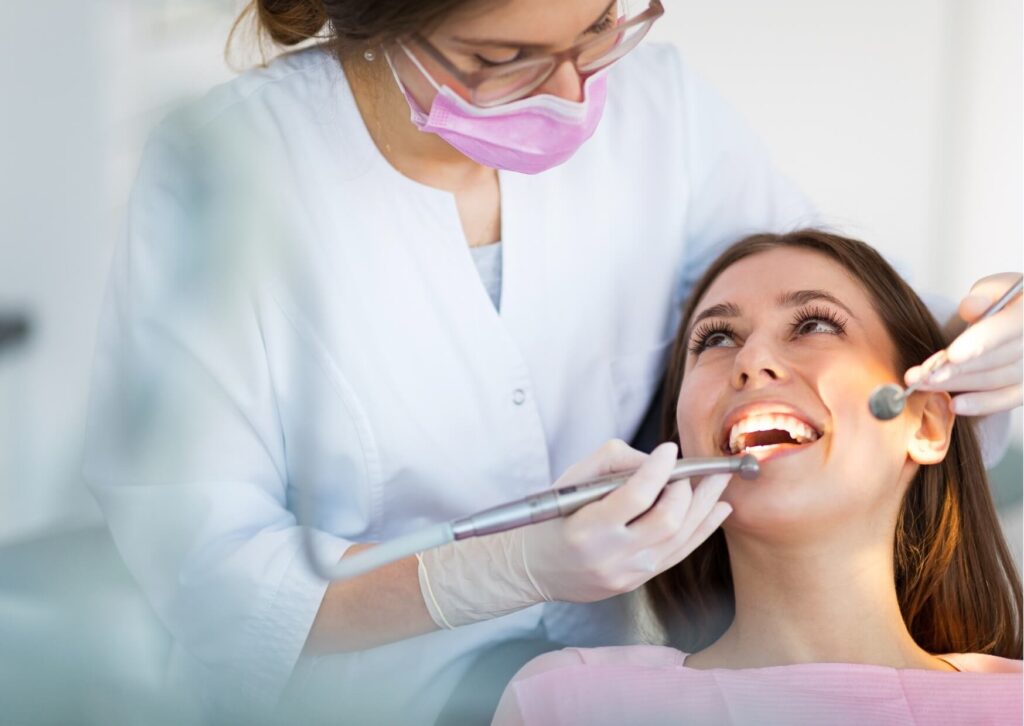
During an evaluation, the dentist is not simply choosing between two ceramics in isolation. The decision is tied to the condition of the teeth and the way the mouth functions as a whole.
Key factors often include how much enamel remains for bonding, whether the tooth is rotated or protruded, how much color change is needed, whether the patient shows a lot of teeth when speaking and smiling, and how the front teeth contact during chewing and jaw movement. Small details matter. A patient who bites into crusty bread with the front teeth all day places different demands on veneers than someone whose bite keeps the front teeth relatively protected.
There is also a practical philosophy behind cosmetic dentistry that patients can often sense even if it is never said out loud. Some treatment plans aim for maximum translucency and delicacy. Others prioritize resilience and predictability. Neither mindset is wrong. The best recommendation usually comes from balancing beauty with biology and function, not from chasing a material name.
Patients naturally want a simple answer about how long veneers last. The honest answer is that lifespan varies. Both E-max and Empress veneers can last many years when case selection is good, bonding is done well, and the bite remains stable.
What tends to shorten veneer life is not always the ceramic itself. Failures may happen because of grinding, edge loading, trauma, decay around the margins, bonding issues, or changes in the tooth over time. A veneer can also remain intact but become less ideal cosmetically if the gumline shifts or nearby teeth change color.
It is worth saying plainly that no veneer material is permanent in the absolute sense. Cosmetic dentistry can improve a smile dramatically, but the mouth is still a living environment. Saliva, force, aging, habits, and tissue changes all continue to affect the result. A well-made veneer can age beautifully, but it still needs maintenance, monitoring, and realistic expectations.
Many patients expect E-max and Empress to have a clear, fixed price difference. In reality, the fee often depends more on the dentist’s planning process, the laboratory, the complexity of the case, temporary restorations, photography, mock-ups, and follow-up care than on the ceramic alone.
A veneer placed by a dentist who works closely with a high-end ceramist in a major city may cost much more than one placed in a lower-overhead setting, even if the material category sounds similar. That does not automatically mean the higher fee is better, but it usually reflects time, customization, and technical input.
If comparing estimates, it helps to ask what is included. A lower quote may not include detailed smile design records, trial mock-ups, bite analysis, or replacement of old bonding defects. Those details often matter more to the final result than whether the label says E-max or Empress.
Not every cosmetic concern should be solved with veneers. If there is active gum disease, untreated decay, significant enamel loss, unstable bite trauma, or ongoing grinding that has not been addressed, a dentist may recommend stabilizing those issues first.
In some cases, orthodontic treatment, whitening, dental bonding, or a crown may be more appropriate than a veneer. For example, a tooth with a large existing filling or a crack may not behave like an ideal veneer candidate. A severely dark tooth may also require a different restorative strategy depending on the underlying cause.
This can be a frustrating moment for patients who came in hoping for a simple cosmetic fix. Still, it is often the most trustworthy part of the visit. Good cosmetic dentistry is not just about what can be bonded to a tooth. It is about what can be done safely and predictably over time.
If a tooth being considered for veneers is painful, sensitive to biting, swollen at the gumline, or associated with a pimple-like bump on the gum, that needs evaluation before cosmetic planning moves forward. These signs may suggest infection, a crack, pulp inflammation, or another problem that veneers alone will not solve.
Seek prompt dental care if there is facial swelling, fever, spreading pain, or sudden trouble biting comfortably. Those symptoms are not typical cosmetic issues and should not be managed by delaying care or focusing on veneer material comparisons.
Even less urgent changes deserve attention if they persist. Recurrent chipping, increasing sensitivity, or a tooth that has darkened over time may point to structural or nerve-related problems that need diagnosis before any elective veneer treatment.
A helpful way to approach this choice is to ask four questions. How much stress will the veneer face? How much color correction is needed? How conservative can the preparation be? And how important are subtle optical effects in this specific smile?
If the case is high esthetic, low stress, and the tooth color underneath is already favorable, Empress may still be a thoughtful option. If the case needs more versatility, more strength, or more masking ability, E-max is often the more practical recommendation.
In everyday dentistry, that is why many clinicians use E-max more frequently. It covers a wider range of situations with fewer compromises. But “used more often” is not the same as “best for every person.” The right answer usually comes from the examination, photographs, bite analysis, and a candid conversation about goals, risks, and trade-offs.
Ready to decide whether veneers are the right fit for your smile? Schedule a consultation with Starlite Dental to receive a personalized cosmetic evaluation and learn which veneer option best matches your goals, bite, and long-term dental health. Call (214) 504-0500 today to get started with veneer treatment for patients in McKinney, TX, and nearby communities.
Not universally. E-max is often chosen more often because it offers a strong balance of esthetics and durability, but Empress may still be an excellent choice in selected cosmetic cases where light transmission and subtle enamel-like appearance are the priority.
Either can look very natural when the case is planned well. The final appearance depends on the tooth underneath, the shade strategy, the preparation design, and the laboratory work, not just the ceramic name.
Not necessarily. They are used less commonly in some practices because newer materials such as E-max offer broader versatility, but Empress can still be appropriate in the right indication.
Patients with grinding or clenching may need a careful bite evaluation before any veneer treatment. In many cases, E-max is considered more suitable than Empress when higher stress is expected, but the bite and overall treatment plan matter just as much as the material.
No. A meaningful recommendation requires an exam and often photos, X-rays when indicated, and bite assessment.
This article is general education, not personalized dental advice.