Celebrating 10 Years as McKinney’s "No Anxiety" Dentist!
A patient sits down and asks the question almost everyone asks sooner or later: “What do dental implants actually cost?” It is a practical question, but it rarely stays practical for long. Behind it is usually something more personal: wanting to chew comfortably again, not wanting a removable denture, or feeling tired of hiding a gap in photos.
In a dental office, the answer is almost never a single number. Dental implants depend on what is being replaced, the health of the bone and gums, whether additional procedures are needed, and which parts of treatment are included in the quote. That is why one office may mention a few thousand dollars while another presents a much larger estimate that includes imaging, surgery, healing components, and the final crown, bridge, or denture.
There is also a human side to the conversation that does not show up on a fee sheet. Losing a tooth can make people feel older, less steady, or less like themselves. An implant is not only a replacement for a missing tooth. In many cases, it is also an attempt to restore function, confidence, and a sense of normal routine. If anxiety affects your care, learn more about dental anxiety.
At Starlite Dental, patients in McKinney, TX, can explore dental implant options with a team focused on education, comfort, and personalized care. Whether replacing a single tooth or planning a more complex restoration, we help individuals understand the full scope of treatment and what may influence the cost of dental implants over time.
A dental implant is a small titanium or titanium-alloy post placed in the jawbone to support a replacement tooth. The implant itself is only one part of the total fee. Many patients hear a price online and assume it covers the whole process, then feel blindsided when they learn there are several separate steps.
A complete implant case often includes the consultation, dental exam, and imaging such as 3D cone beam scanning. It may also include the surgical placement of the implant, a healing cap or abutment, and the final restoration, which could be a crown for one tooth, a bridge for several teeth, or a denture that attaches to implants. The final crown is often billed separately from the implant surgery, and that distinction matters.
Some offices present treatment as a bundled fee. Others separate each stage. Neither approach is automatically better, but patients should ask for a written breakdown so the comparison is fair and clear.
The short answer is that mouths are not standardized. One patient may have a recently lost tooth with a healthy surrounding bone. Another may have had a missing tooth for years, with bone shrinkage, gum changes, or nearby teeth drifting into the space. Those are very different starting points.
Several factors can raise or lower the total cost:
A front tooth can be especially demanding because appearance matters as much as function. Matching shape, gum contour, and color takes planning and precision. Back teeth may be less visible, but they absorb heavy chewing forces, which can also influence treatment design and cost.
In many parts of the United States, a single dental implant restored with a crown may fall somewhere in the range of several thousand dollars from start to finish. In some offices, patients may hear figures around $3,000 to $6,000 or more for one fully restored implant, especially when advanced imaging, custom components, or specialist care are part of the plan. That broad total cost often reflects whether the quote includes the implant post, abutment, and final crown.
That range is broad for a reason. If the quoted fee covers only the surgical implant placement, the number may sound lower at first. If it includes the exam, imaging, extraction, grafting, temporary restoration, abutment, and final crown, the number will usually be higher. A low advertised price may not reflect the full treatment cost.
For multiple missing teeth, pricing becomes even more variable. Two or three implants may support a bridge, while a full arch may be restored with several implants and a fixed prosthesis. Those cases can move into much higher fee ranges because they involve more planning, surgery, laboratory work, and follow-up care.
Costs also differ by region. A practice in a major metro area with high laboratory and facility expenses may charge more than an office in a smaller community. That does not automatically mean the care is better or worse. It usually reflects differences in case complexity, local economics, and what is included.
This is often the part of the conversation where the room gets quiet. A patient may come in expecting to pay for one implant and one crown, only to learn that the site needs preparation before an implant can be placed safely.
If a damaged tooth is still present, extraction may be the first step. If bone has thinned after long-term tooth loss, grafting may be recommended to rebuild support. In the upper back jaw, a sinus lift may be needed when the sinus space sits too close to the implant site. These procedures are not cosmetic add-ons. They may be important for stability and long-term success. In many cases, those steps fall under oral surgery.
Other possible costs can include:
In my view, the most useful estimate is not the cheapest one. It is the one that honestly reflects the likely path from diagnosis to a functioning final tooth.
A patient may ask, “Why not just do the least expensive thing?” That is a fair question. Dentistry always lives in the tension between what is ideal, what is acceptable, and what is realistically affordable.
A dental bridge may cost less upfront than an implant in some cases, but it usually requires reshaping the neighboring teeth to support the bridge. If those teeth are already heavily filled or crowned, that may be reasonable. If they are healthy and untouched, some patients prefer not to alter them. A removable partial denture may be less expensive still, but it can feel bulkier and less natural during chewing or speaking.
Implants can help preserve the jawbone by transferring chewing forces into the jaw in a way that more closely resembles a natural tooth root. Bridges and dentures do not do this in the same way. That does not mean implants are always the right choice, only that the long-term value discussion should include function, maintenance, comfort, and the condition of nearby teeth, not just the first number on the estimate.
| Option | Upfront Cost | Effect on Nearby Teeth | Bone Support | Feel and Function |
| Single implant with crown | Often higher | Usually does not require cutting adjacent teeth | Helps maintain bone in the area | Often closest to a natural tooth |
| Traditional bridge | Often moderate | Usually requires shaping neighboring teeth | Does not replace the root in bone | Can function well when well designed |
| Removable partial denture | Often lower | Usually limited direct alteration of nearby teeth | Does not maintain bone like an implant | May feel less stable or less natural |
The best option depends on the mouth in front of the dentist, not just the spreadsheet.
Many dental insurance plans provide limited implant coverage, though this has improved in some policies. A plan may help with the crown, extraction, or imaging while covering little or none of the implant surgery itself. Medical insurance may occasionally play a role in unusual circumstances, but for routine tooth replacement, dental benefits are usually the main issue.
It helps to ask the office very direct questions. Is the estimated pre-insurance or expected out-of-pocket cost? Does it include the final restoration? Are there separate specialist fees? What happens financially if grafting becomes necessary after the tooth is removed? A written treatment estimate is one of the most useful documents a patient can request.
Many practices offer phased treatment or third-party financing. There is nothing unusual about needing to discuss cost openly. In fact, the most responsible treatment planning happens when the clinical ideal and the financial reality are discussed together rather than pretending one of them does not exist.
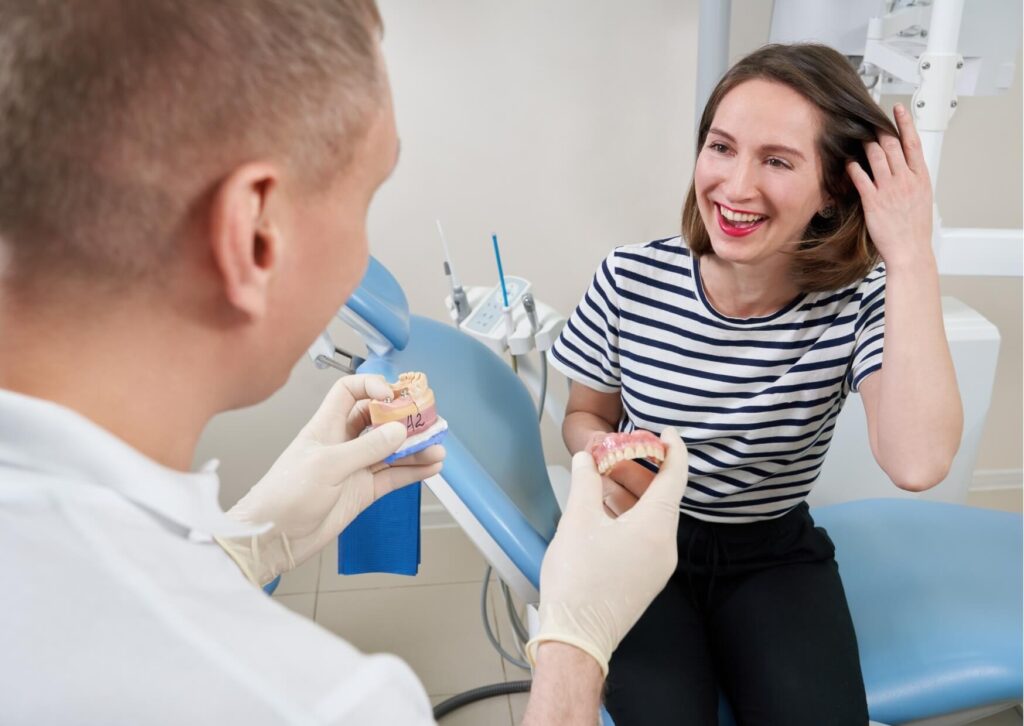
Not everyone who wants an implant is immediately ready for one. Healthy gums, sufficient bone, and good daily oral hygiene all matter because the implant needs a stable environment to heal and function over time.
Certain risk factors can complicate treatment. Uncontrolled gum disease, heavy smoking, poorly controlled diabetes, severe teeth grinding, and some medical conditions may increase the risk of delayed healing or implant failure. That does not always rule out treatment, but it may change the plan, timing, or prognosis. A dentist may also recommend treating decay, gum inflammation, or bite problems before moving forward.
If there is pain, swelling, drainage, fever, or a rapidly changing area around a failing tooth, that should be evaluated promptly. Facial swelling, trouble swallowing, or signs of a spreading infection are urgent red flags and should not wait for a routine implant consultation.
There is often a moment in the consultation when the discussion shifts. The patient stops asking, “How much is the implant?” and starts asking, “What exactly is happening in my mouth?” That is usually the better question.
A trustworthy implant discussion should explain why the tooth was lost, whether the surrounding gum and bone are healthy, what alternatives exist, how long treatment may take, and what maintenance will be required after placement. Cost matters, but cost without diagnosis is just a number floating in space. The real value of treatment depends on whether the plan fits the biology, the bite, and the patient’s priorities.
In that sense, implant treatment can feel surprisingly existential. A missing tooth is small, but it can change how meals feel, how speech lands, how a smile is offered, and how aging is quietly interpreted in the mirror. Replacing a tooth is not only a mechanical act. Sometimes it is a way of reclaiming continuity after something has gradually come apart.
Getting a clear and personalized evaluation is the best way to understand your options and expected costs. Call Starlite Dental at (214) 504-0500 to schedule a consultation at our McKinney, TX office and learn more about treatment plans designed around your oral health, comfort, and long-term goals. We proudly welcome patients from nearby Frisco, Plano, and Prosper seeking trusted implant care.
A single implant with the final crown often costs several thousand dollars in the United States, but the total can vary widely depending on imaging, surgery, grafting, and restoration fees.
The fee reflects multiple parts of care, including diagnostics, surgical placement, healing time, custom components, laboratory fabrication, and follow-up. Complex cases may also require bone grafting or other preparatory treatment.
For many patients, implants offer strong function, a natural feel, and support for the surrounding bone. Whether they are worth the cost depends on oral health, alternatives, long-term goals, and budget.
Some plans cover part of the treatment, but many provide limited benefits. Coverage varies, so it is important to review the policy and ask the dental office for a written estimate.
A bridge or removable partial denture may cost less upfront. However, the best option depends on the condition of nearby teeth, bone support, comfort, and expected maintenance.
Seek prompt dental care if there is severe pain, swelling, pus, fever, a bad taste with drainage, or a broken tooth with worsening symptoms. Urgent evaluation is especially important if swelling is spreading or swallowing becomes difficult.