Celebrating 10 Years as McKinney’s "No Anxiety" Dentist!
Dental implants can last 20 years or longer, and many stay functional for a lifetime with good home care and regular dental visits. Long-term evidence shows strong 20-year survival for implants overall. The crown attached to the implant usually wears out sooner, often after about 10 to 15 years, though timing varies by health, habits, bite force, and tooth location.
It is normal to hesitate over a treatment that involves surgery, healing time, and a financial commitment. If cost is part of your decision, see the cost of dental implants.
If you're weighing the long-term benefits and upkeep of a missing tooth, exploring dental implants can clarify whether they suit your needs. At Starlite Dental in McKinney, TX, our team focuses on predictable outcomes and personalized care to help you understand longevity, maintenance, and practical options.
A full implant restoration has several parts, and they do not all last the same amount of time. The implant is the post placed in the jawbone, the abutment connects that post to the visible tooth, and the crown is the part you chew with.
|
Implant Component |
Typical Longevity |
Why Replacement May Be Needed |
|---|---|---|
|
Implant post |
Often 20 years or longer |
Bone loss, infection, overload, or failure to integrate |
|
Abutment |
Often many years |
Loosening, wear, or fracture |
|
Crown |
Commonly 10 to 15 years |
Normal wear, chipping, fracture, or appearance changes |
These are general estimates, not guarantees. A healthy implant post may support more than one crown over time.
A missing tooth can affect chewing, speech, and confidence. Teeth next to the space may drift, and the jawbone in that area can shrink because it no longer gets normal root stimulation.
An implant transfers chewing force into the jaw and may help preserve bone around the missing tooth site. Unlike a traditional bridge, a single implant also usually avoids reshaping healthy neighboring teeth.
Not every missing tooth needs an implant. A dentist may also discuss a bridge, a partial denture, or in some cases leaving the space untreated, depending on the location, bone support, oral health, and your goals.
The biggest long-term factor is the health of the gums and supporting bone. Plaque around an implant can cause peri-implant mucositis, which can progress to peri-implantitis and lead to bone loss.
Factors that may shorten implant life include smoking or vaping, poorly controlled diabetes, teeth grinding, inconsistent cleaning, untreated gum disease, and missed maintenance visits. These risk factors are commonly linked to peri-implant disease. Strong bite forces, some medical conditions, and certain medications can also affect healing and long-term stability.
Treatment planning matters too. Adequate bone, precise placement, a balanced bite, and a restoration that is easy to clean all help reduce avoidable stress on the implant.
Daily brushing and cleaning between the implant and nearby teeth are still essential, even though the implant itself cannot get a cavity. Healthy tissue around the implant is the best protection against preventable failure.
Local anesthetic numbs the area, so most patients feel pressure or vibration rather than sharp pain during placement. Sedation dentistry may help if you have dental anxiety, a strong gag reflex, or a longer procedure planned. If anxiety is a concern, learn more about managing dental anxiety.
If a deeper comfort option is appropriate, your clinician may also discuss conscious sedation dentistry. The right option depends on your health history and the treatment setting.
Some patients can receive an implant right after a tooth is removed. Others need healing time first, and some need bone grafting before or during placement if the jaw does not have enough height or width.
Before treatment, the dental team should review your medications, allergies, medical conditions, tobacco use, and past dental experiences. That helps guide both safety and comfort planning.
Planning usually includes an exam, dental imaging, and often a cone-beam CT scan to evaluate bone and nearby structures. During the procedure, the clinician prepares a precise space in the jawbone, places the implant, and closes the area if needed.
Mild swelling, tenderness, bruising, and light bleeding can happen during the first few days. Many people return to normal activities within a day or two, though recovery depends on the complexity of the procedure, grafting, and overall health.
The implant usually needs several months to bond with the bone through osseointegration. A temporary tooth may be possible during healing, and the final crown is usually placed once the implant is stable enough for chewing.
Follow your clinician's instructions about food, cleaning, activity, and medications. Avoid chewing hard foods on the healing side until your dental team says it is ready.
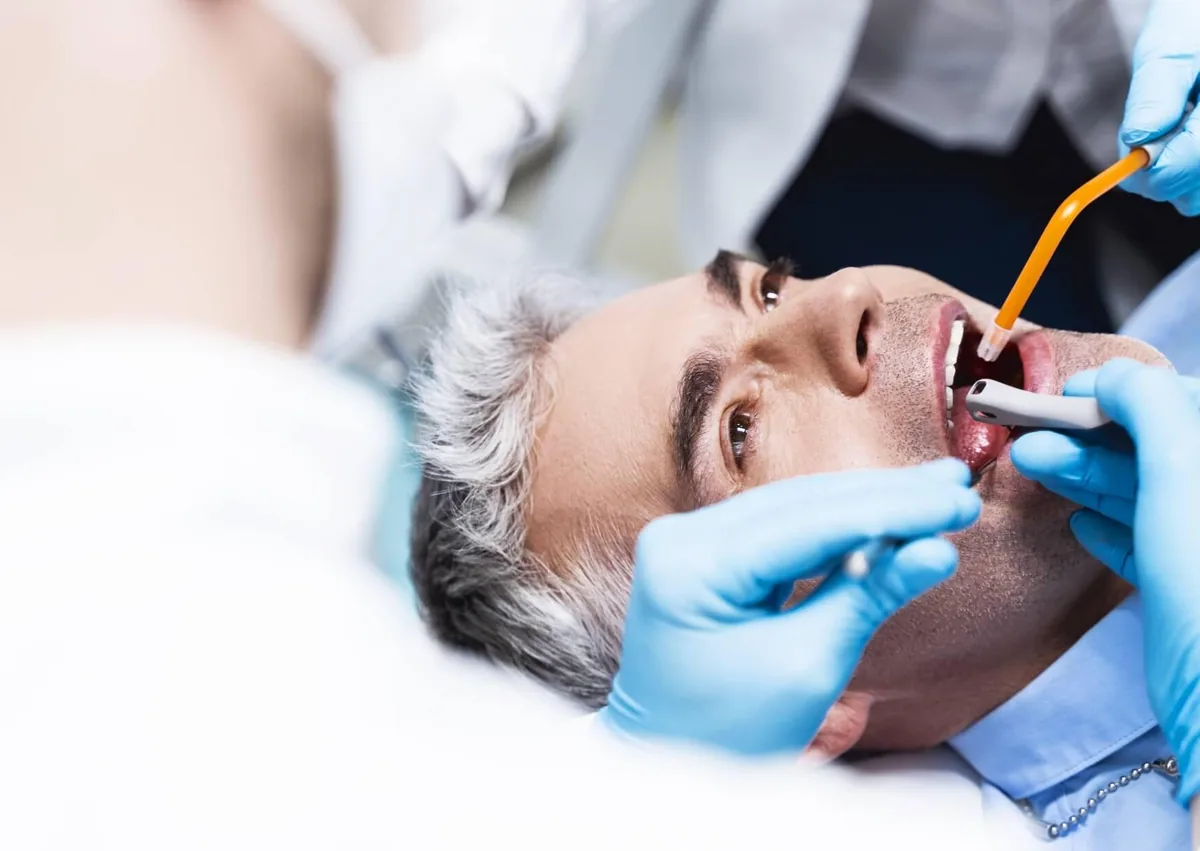
Brush twice a day with a soft-bristled toothbrush and clean around the implant every day with floss, an interdental brush, or another tool your dental team recommends. The best tool depends on the shape of the restoration and whether it replaces one tooth or several.
Keep regular visits with a preventive dentistry team for exams and professional cleanings. These visits help monitor gum health, bone levels, bite force, crown wear, and whether any parts are loosening.
If you grind or clench, a nightguard may help protect the implant from excess force. Avoiding tobacco and managing conditions such as diabetes may also improve long-term results.
A healed implant should not feel loose. Sometimes a loose crown or abutment creates that feeling instead, but either way it should be checked promptly.
Contact a dentist if you notice new movement, persistent pain, swelling, bleeding around the implant, pus, a bad taste, gum recession, or trouble chewing. These symptoms are not normal if they continue or worsen.
Seek urgent care for rapidly increasing facial swelling, fever with worsening dental symptoms, uncontrolled bleeding, trouble swallowing, or trouble breathing. Even if nothing hurts, routine implant reviews still matter because early inflammation may cause few symptoms.
A consultation lets a clinician review your imaging, explain restorative options, and estimate expected longevity for your situation. Call Starlite Dental to discuss dental implants in McKinney, TX, including care for patients from Allen and Prosper, at (214) 504-0500 to schedule.
Yes, an implant post can last for life, but no dentist can promise that outcome. Oral hygiene, gum and bone health, tobacco exposure, medical conditions, bite force, and regular maintenance all affect longevity.
Usually not. If the implant and abutment are still healthy and stable, a dentist may only need to replace the crown through restorative dentistry. An exam and imaging may be needed to confirm that the underlying parts are still in good condition.
Implants should be checked during regular dental visits, with the timing based on your risk level. People with a history of gum disease, tobacco use, diabetes, or prior implant inflammation may need closer monitoring.
No. New or persistent pain years later is not considered normal and should be evaluated. Possible causes include gum inflammation, bite overload, a loose component, a damaged crown, or a problem with a nearby tooth.