Celebrating 10 Years as McKinney’s "No Anxiety" Dentist!
If you are worried that plaque buildup means something is seriously wrong, the first step is usually simple. To remove plaque from teeth, brush twice daily with fluoride toothpaste, clean between the teeth once a day, and keep regular dental cleaning appointments.
Soft plaque can often be removed at home, but hardened plaque, called tartar or calculus, must be removed by a dental professional at a preventive dentistry visit rather than scraped off at home.
If hardened plaque or frequent buildup is making your teeth feel rough or your gums bleed, preventive dentistry can safely remove tartar and help lower the chance of future irritation. At Starlite Dental in McKinney, TX, our gentle cleanings and personalized home-care guidance help protect your teeth and support healthier gums.
Plaque is a sticky, nearly colorless film of bacteria that forms on teeth every day. It tends to collect along the gumline, between teeth, and around dental work such as crowns, bridges, implants, and braces.
When plaque stays in place, the bacteria feed on sugars and other carbohydrates and produce acids. Those acids can weaken enamel and raise the risk of cavities.
Plaque near the gums can also lead to redness, swelling, tenderness, or bleeding. If it is not removed, it can absorb minerals from saliva and harden into tartar.
Tartar creates a rough surface that holds onto even more plaque. Over time, that can contribute to gingivitis, the earliest stage of gum disease; learn how to fix gingivitis.
Brush for two minutes twice a day with a soft-bristled manual or powered toothbrush and fluoride toothpaste. Angle the bristles slightly toward the gumline and use gentle circular motions on the outer, inner, and chewing surfaces of each tooth.
Avoid aggressive scrubbing. It does not remove plaque better, and it can irritate the gums or wear tooth surfaces over time.
Replace your toothbrush or powered brush head about every three to four months, or sooner if the bristles are frayed. Worn bristles clean less effectively.
Clean between the teeth once a day with floss, an interdental brush, or a water flosser. The best tool is one you can use comfortably and consistently, because a toothbrush cannot fully clean these spaces.
A dentist or dental hygienist can help you choose the right option for tight contacts, larger spaces, braces, bridges, or limited hand mobility. Plaque-disclosing tablets may also help show missed areas if used as directed.
Do not try to scrape tartar off with dental picks, metal tools, fingernails, or household objects. These can cut the gums, scratch teeth, damage dental work, or push buildup below the gumline.
Avoid acidic or abrasive home remedies such as lemon juice, vinegar, charcoal, or baking soda mixtures. They cannot safely remove tartar and may irritate soft tissue or wear away enamel.
Mouthwash can be a helpful extra step, but it does not replace brushing or cleaning between the teeth. If a rinse causes burning, irritation, or staining, stop using it and ask a dentist whether a different type would be better.
Tartar may feel like a hard, rough deposit that does not brush away. It can look yellow, tan, brown, or dark near the gumline, and some buildup may sit below the gums where it is not easy to see.
During a routine cleaning, a dental hygienist or dentist uses specialized instruments to remove plaque and tartar; for more detail, see dental cleaning duration. If buildup extends below the gumline or there are signs of periodontitis, treatment may include scaling and root planing to clean and smooth the root surfaces.
Dental cleanings are often well tolerated, but sensitive teeth or inflamed gums can make some areas uncomfortable. Tell the dental team about anxiety or sensitivity (see dental anxiety) so they can pause as needed, adjust instruments, use topical numbing, or discuss sedation dentistry when appropriate (see types of sedation dentistry).
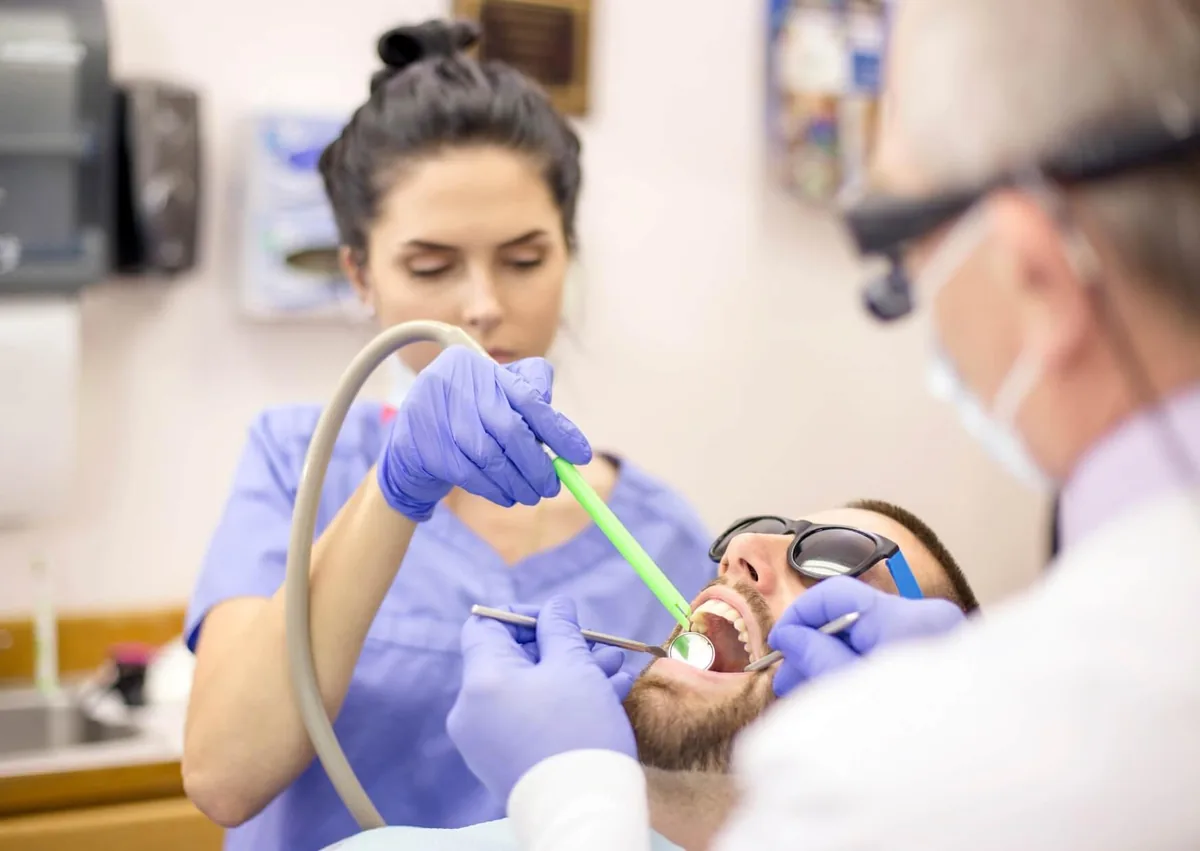
A routine visit often includes a health history review, an exam of the teeth and gums, and a cleaning followed by polishing when appropriate. Dental X-rays may be recommended based on symptoms, risk factors, dental history, and when previous images were taken.
After a cleaning, the gums may feel mildly tender or bleed a little, especially if there was inflammation or heavier tartar buildup. Gentle brushing and daily cleaning between the teeth usually help this settle down.
If deeper treatment is needed, temporary tooth sensitivity can happen. Your dental team may give you specific aftercare instructions based on the amount of buildup and the condition of your gums.
Schedule a dental visit if hard deposits do not brush away, your gums bleed often, breath odor persists, or your gums are swollen, tender, or receding. Tooth sensitivity, loose teeth, pain while chewing, or pus near the gumline also deserve prompt evaluation.
If plaque has already led to decay or damage that cleaning alone cannot correct, restorative dentistry may be recommended to repair the teeth and restore function.
Seek urgent dental care for rapidly increasing facial or gum swelling, severe or worsening pain, fever with dental symptoms, or trouble opening the mouth. Trouble breathing or swallowing with oral or facial swelling needs immediate emergency care.
Even if nothing hurts, regular exams and cleanings can catch plaque-related problems early. A dental professional can also suggest a cleaning schedule based on your cavity risk, gum health, medical history, and past treatment.
For a professional cleaning or to address stubborn tartar, schedule a preventive dentistry visit to restore gum health and reduce future buildup. Starlite Dental offers preventive dentistry in McKinney, TX and nearby Frisco and Allen, call (214) 504-0500 or book online to arrange a convenient appointment.
Soft plaque can usually be removed with thorough brushing and daily cleaning between the teeth. Once it hardens into tartar, professional instruments are needed for safe removal.
Plaque starts forming again soon after teeth are cleaned. That is why consistent daily home care matters.
If plaque is left in place, it can harden into tartar over time. How fast this happens varies based on saliva, oral hygiene, tooth position, and other factors.
Bleeding often happens when plaque has inflamed the gums. It can also be related to brushing too hard, certain medications, or other health conditions.
Keep cleaning the area gently rather than avoiding it. Schedule an evaluation if bleeding is persistent, heavy, worsening, or unexplained.
Both manual and powered toothbrushes can work well when used thoroughly and consistently. A powered brush may be easier for someone with braces, limited dexterity, or difficulty maintaining technique.
Professional cleaning instruments are designed to remove deposits without harming healthy enamel when used appropriately. Temporary sensitivity can happen, especially if tartar had covered exposed root surfaces or the gums were inflamed.